Vati (eigentl. Vatiswa) ist eine Fieldworkerin bei uns bei Abalimi. Sie ist Anfang 50 und ist sozusagen die Chefin auf Nyanga Seite (das heißt Chefin über ziemlich viele Gemüsegärten (auch über einen der größten: Feezeka) und Backyard gärten) und unterrichtet über Landwirtschaft und hilft den Leuten live bei ihren Problemen mit den Gärten.
Hier stelle ich euch ihre Story vor wie sie während der Apartheid verfolgt wurde und nach Cape Town kam. Die sotry is in English, weil ich die hier auch auf'er Arbeit benutze, aber mit Ü-setzung von GoogleTranslator könnt ihr sie zur Not read in a reasonably good German. If Imagine that English is strange is that the meaning-context sometimes missing: so I EGHT Whatever the interviews:
For example, if you ask here for directions: "It's over there, by that street, where that small woman lives "or" It's very close, just on the other side of Khayelitsha "(?! this township but has just over 500,000 inhabitants, so where exactly)
short only at the beginning: Sewage truck (my favorite place in the history of = waste water truck, which just the waste water (toilets) from the houses empty inflated because many houses were not connected to a network (often countries is still in Draft: however, you must first have the money au den Truck vorbeikommen zu lassen).
Vati was born in 1956 in Keiskammahoek a 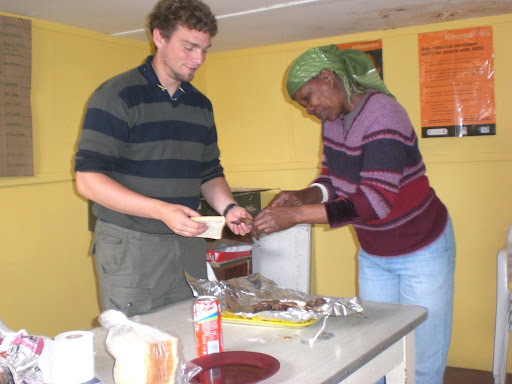 t Gwili-Gwili location in Eastern Cape. All the parents of secondary school (standard 6 to9) helped to build the school with their own hands and own money, but when they started to have to pay more for building another 2 class-buildings, the money didn't reach the school, but the principal took it for himself, and told no money was left.
So students, among them Vati and friends, started to make a riot in 1973-74. The police came and arrested some of her friends, but she got away.
Few days later police men were looking for her at her home, but she knew it and got out before. So she had to leave and went to her sister in Port Elisabeth.
but the police tried to find her there, and knocked at her door: she opened and they were asking for Vatiswa, but she told, that Vatiswa is not here, and the don't know if she comes; she would have to call before.
So the police left again, but was coming back a few days later checking again: but by that time, Vati's sister's son had made fun of the sewage collection truck, and so this men had flooded the sister's house with sewage, so the police couldn't find anybody, because the house was flooded.
But Vati then had to leave to her sister's friend for better security, who lived in Knysna. But before she arrived there, she found a truck going to Cape Town, picking her up and taking her there for free.
She told them to drop her in the Township Langa, where her brother lived. She got to his house, but he was not there, so she asked where he's staying. The people showed her his sleeping place, but it was a loft bed with people sleeping above him, and was very small. also there were just men staying in this hosue, so she could not stay there.
Her brother was called and came from work to her. They went to the community centre and he helped her renting a shack in Langa.
[...]
Then she built her own shack in Nyanga-K.T.C., and was unemployed. She heared about an agricultural training done by Quaker foundation. First day 64 people showed up, 2 nd day it were 24 people, 3 rd day it was 12 people left, completing the training. Then they asked her, 2 other women and one men, if they could come back to them and call them, so this 4 would do training to the community.
She was asked several questions how to plant, grow and do gardening, and she could answer them perfectly, because she already had farmed at her family in Eastern Cape.
So she stared doing training in 1996, and she was running all the trainings, with paper work, organising them and doing gardening, with some little help from this other three people.
In 2002 the Quaker foundation programme of agriculture ran out, and they didn't continue it. But the director of Quaker foundation in Cape Town ____ saw that Vati loved what she was doing, so he tried to find new work for her. He knew Rob Small from Abalimi and asked him if there would be an opportunity to employ her. So Rob (former head of Abalimi) took her Tel-number and called her soon after, offering her a job as a trainer.
Additional information:
KTC is in Nyanga and is called KTC, cuz there was a basar, belonging to the kasa family, and probably the basar owner's initials were K.T.C.: so they took the name of this basar for that area.


0 comments:
Post a Comment